
Sovereign AI in Pakistan: Infrastructure, Rules and What Your Enterprise Should Do Next

Written by Muhammad Rizwan
October 12, 2026
4 min Read
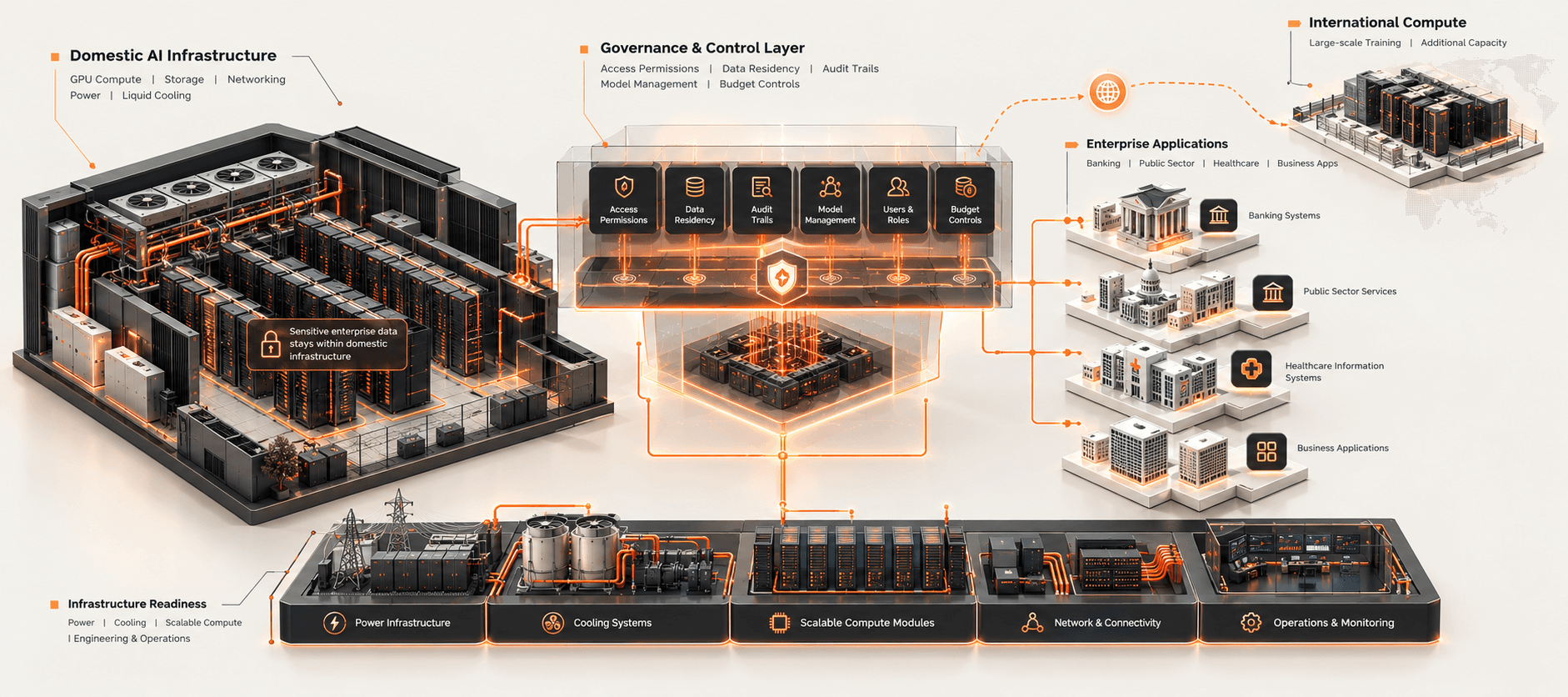
Sovereign AI in Pakistan means running AI on infrastructure, data and controls that stay inside the country, and in 2026 it became something enterprises can actually use. Purpose-built AI data centres came online, led by Sky47's Karakoram-01 in Islamabad, while regulators continued to set rules on where sensitive data can be processed.
For enterprises, the question has moved on from whether Pakistan has domestic AI infrastructure to three practical ones: which rules apply to you, which infrastructure fits your workloads, and what you need on top of the hardware to use it safely.
This guide covers Pakistan specifically. For why governments worldwide are building sovereign AI, see our overview of the global sovereign AI race. Stixor works inside this transition: Stixor AI Hub, Pakistan's first sovereign AI infrastructure platform, is the platform Sky47 runs at Karakoram-01.
Which Rules Apply to AI and Data in Pakistan?
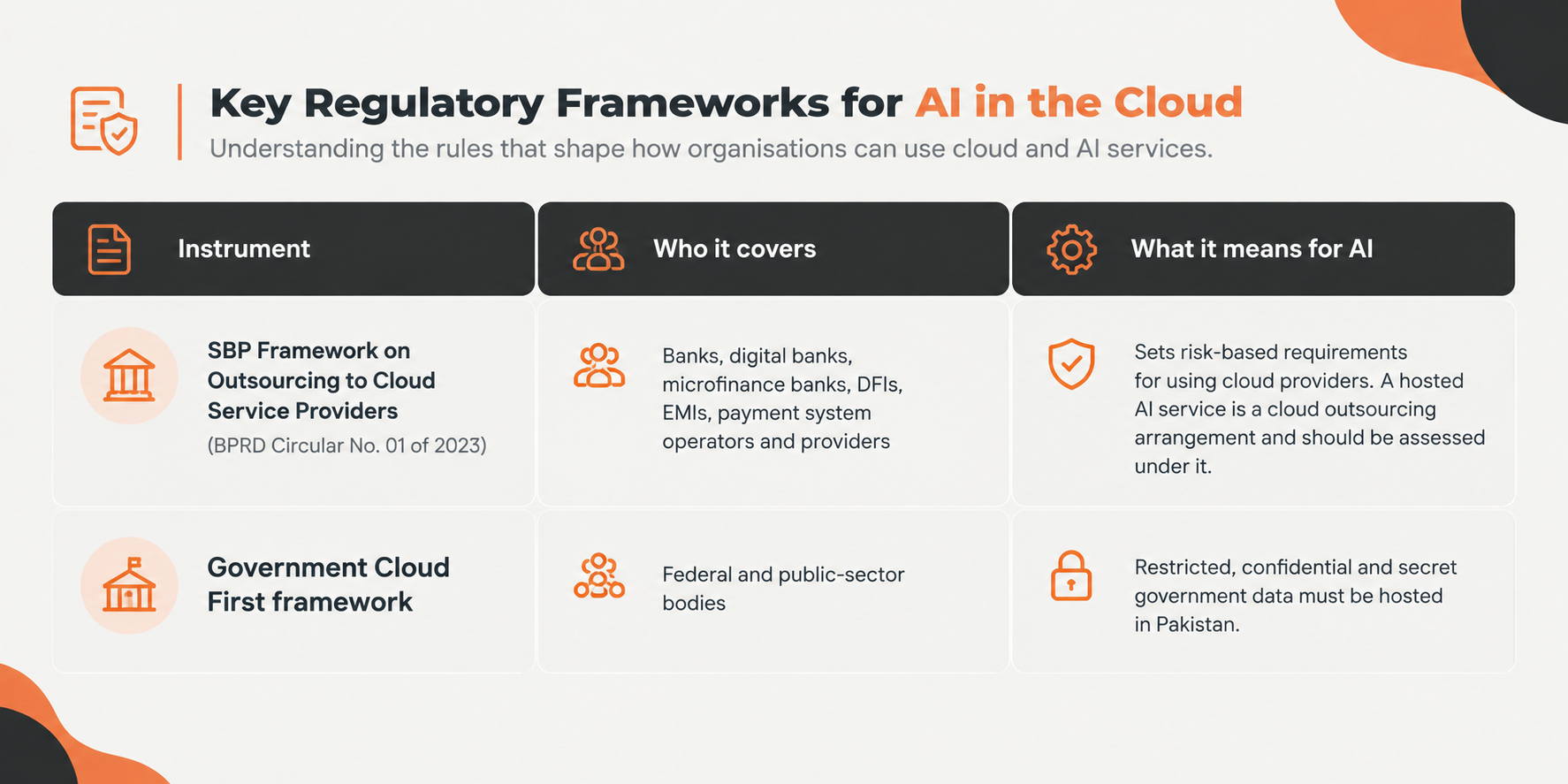
It depends on your sector and the data involved. Some obligations are in force today, some set policy direction, and some are still proposals. Treating them all as equally urgent leads to either panic or delay, so it helps to separate them.
In force
Policy direction
The federal cabinet approved the National AI Policy 2025 on 30 July 2025. Its goals include training one million AI professionals by 2030 and setting up AI innovation and venture funds. The Digital Nation Pakistan Act 2025 created the Pakistan Digital Authority, and the Islamabad AI Declaration, adopted in February 2026, sets out the country's commitment to sovereign and responsible AI. Detailed rules from the AI Directorate have not yet been issued.
Reported or proposed
- Further SBP localisation. One outlet has reported a cloud localisation deadline of Q4 2026 for fintechs, EMIs and digital banks. We have not found the official circular, so confirm it with SBP or your compliance team before relying on it.
- Sovereign Cloud First Policy. Reported as notified by the Pakistan Digital Authority in September 2026. Check the official notification for its scope.
- Personal Data Protection Bill. Still a bill, not law. Drafts have proposed that critical personal data be processed only in Pakistan.
The direction across all three groups is the same: more sensitive data processed at home. Building data residency controls into new AI systems now costs far less than retrofitting them. This is general information, not legal advice; confirm your obligations with your compliance team.
The direction across all three groups is the same: more sensitive data processed at home. Building data residency controls into new AI systems now costs far less than retrofitting them. This is general information, not legal advice; confirm your obligations with your compliance team.
What AI Infrastructure Exists in Pakistan?
Pakistan went from no commercial AI cloud to several operating GPU and NPU facilities in under a year, starting in November 2025. The table lists the main ones, newest first.
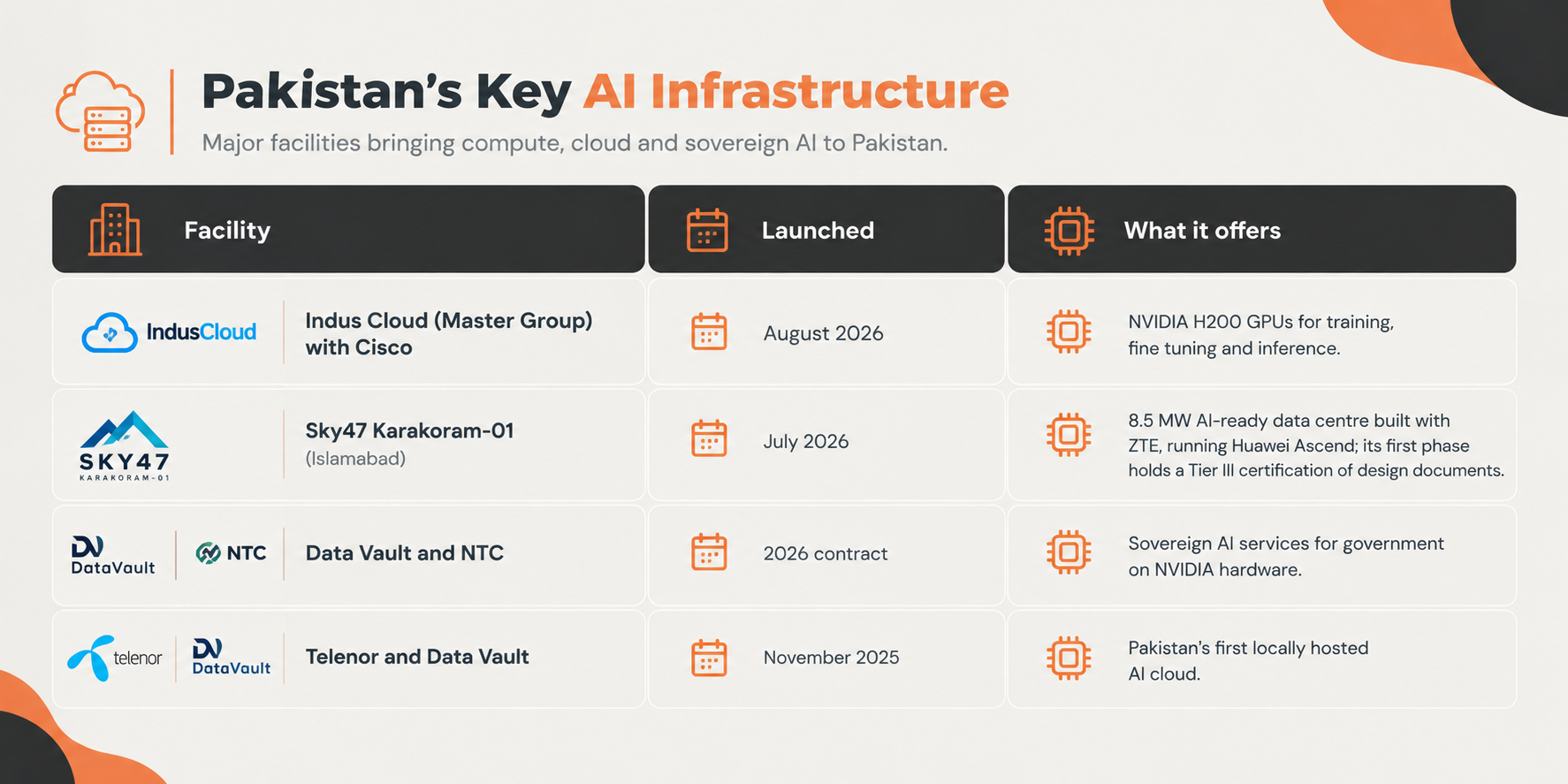
A GPU supercluster at NASTP, with 1,024 accelerators, has also been reported. More capacity is planned, including a Quantum Global facility in Karachi of 80 to 100 MW and a second Sky47 site in Karachi.
Two hardware tracks
Pakistan's AI compute now runs on two accelerator families: NVIDIA at Data Vault and Indus Cloud, and Huawei Ascend at Sky47. Enterprises that plan for both are less exposed to supply problems on either side.
For practical guidance on running models on this infrastructure, see AI inference in Pakistan and how to access leading AI models in Pakistan
What Sits Between the Data Centre and Your Teams?
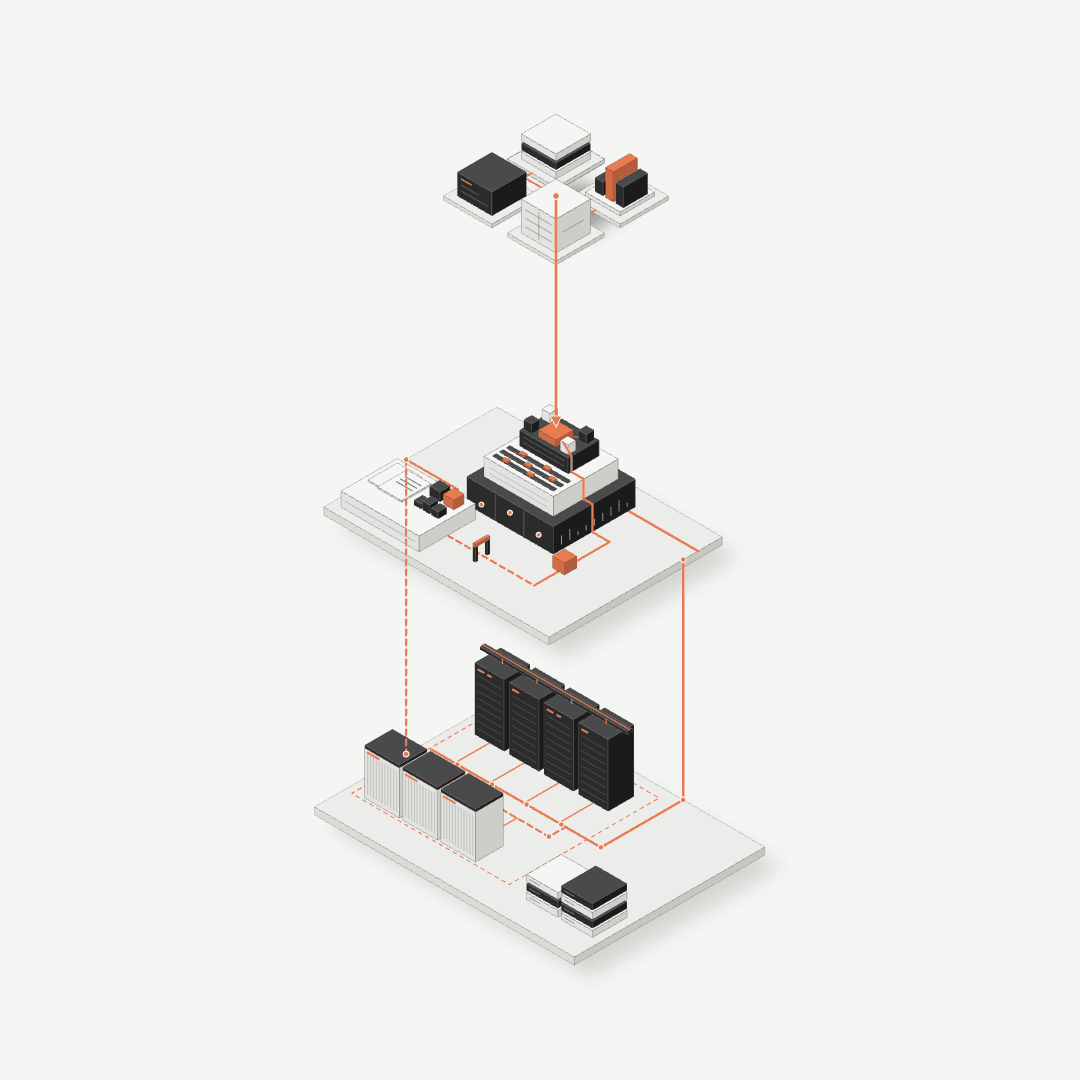
A GPU inside Pakistan decides where data is processed. It does not decide who can use it, how much they can spend, or what gets recorded. Most coverage of sovereign AI stops at megawatts and inaugurations. Most enterprises get stuck one level up.
Picture a bank with five teams that want AI. Each needs its own access, its own budget and its own approved models. Finance wants costs split by team. Compliance wants a record of every call. Data science wants to fine tune a model on customer data without that data leaving the country. None of that comes with a data centre; it needs a platform layer.
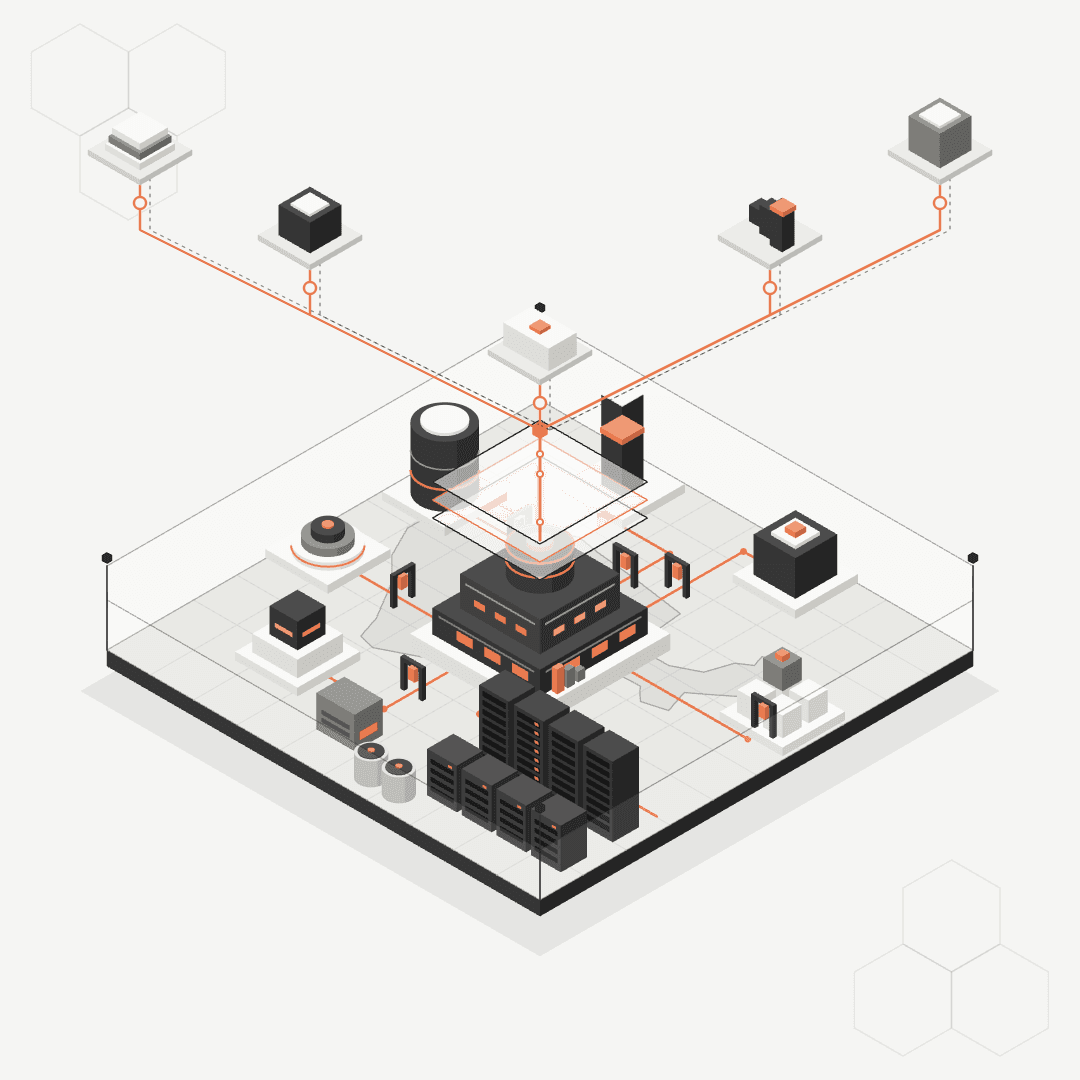
Stixor AI Hub provides that layer in two parts:
- Model as a Service (MaaS): a catalogue of AI models behind one OpenAI-compatible API, with separate keys, rate limits and budgets for each team. Budgets are checked before each request runs, and every call is metered for billing or chargeback.
- Platform as a Service (PaaS): notebooks, training jobs and fine tuning (LoRA, QLoRA or full), with finished models deployed to the same API in one click.
It runs on nine accelerator families, including NVIDIA and Huawei Ascend, on premise, in a private cloud or air-gapped. How Stixor AI Hub works explains the architecture in detail.
What Is Still Missing?
Domestic infrastructure handles inference and moderate training well today. Four gaps remain.
1. Compute for large-scale training
Training a frontier-scale model from scratch needs far more accelerators than any Pakistani facility offers today. For now, inference and fine tuning can run domestically, while very large training runs on non-sensitive data may still need international capacity.
2. Power costs and reliability
Purpose-built facilities engineer around grid instability with backup power and redundancy. That works, but it adds cost, so factor power into the total cost of domestic AI compute.
3. Experienced ML and MLOps engineers
Pakistan has a large and growing software engineering base. What it lacks is a deep bench of ML engineers, MLOps specialists, and data engineers with production AI delivery experience. As one policy analysis noted, most critical datasets remain paper based or locked in fragmented legacy systems. The infrastructure is building out faster than the talent pipeline and data readiness underneath it. This is an honest constraint. It is also why Stixor provides AI and ML engineering services alongside the platform, because many enterprises need both the infrastructure and the team to make it productive.
4. Detailed regulations
The direction is clear, but the AI Directorate's detailed rules have not been issued and the Personal Data Protection Bill is still pending. Until they are, design for stricter data residency, not looser. Building for the stricter case costs a little more now; getting it wrong costs much more later.
What Should Your Enterprise Do This Quarter?
Find out where your data goes today, move the sensitive workloads first, and put governance in place before usage grows. Five steps, in order:
- Map where your data actually goes. List every AI API call, training pipeline and embedding job, and note which ones touch customer, financial or employee data. Most organisations find foreign data flows they didn't know about.
- Check which rules apply to you. If you are SBP-regulated, assess your AI services under the 2023 cloud outsourcing framework. If you are in government, check the Cloud First requirements. Everyone else should plan for the data protection bill.
- Run a proof of concept on domestic infrastructure. Test a real workload, not a demo. Check certifications, latency and failover while there is time to fix problems.
- Use open-weight models for sensitive workloads. Models such as DeepSeek, Qwen and Mistral can run on domestic hardware with no data leaving Pakistan, and can be fine tuned on your own data.
- Build governance in from the start. Per-team access, budget limits, audit trails and data residency controls are cheap to design in and expensive to add later. Stixor's Data Governance Compliance team helps with this.
Most enterprises will end up with a hybrid setup: regulated data at home, and some non-sensitive or very large workloads abroad. That is fine, as long as the split is a written, reviewed decision rather than an accident.
The Bottom Line
Pakistan now has the hardware for sovereign AI, and rules that increasingly favour keeping sensitive data at home. What most enterprises still lack is the layer that turns domestic compute into a service their teams can use safely, with access controls, budgets and a record of every call. Map your data, check which rules apply to you, test on domestic infrastructure, and put governance in place before regulation forces it.

Planning AI that has to stay in Pakistan?
Stixor builds the platform layer for sovereign AI. Stixor AI Hub gives your teams governed access to AI models and fine tuning, on infrastructure in Pakistan.
Frequently Asked Questions
FAQs
Yes. Since November 2025, onshore AI facilities have opened, including the Telenor and Data Vault AI cloud, Sky47's Karakoram-01 data centre near Islamabad, and Indus Cloud's NVIDIA H200 cluster.
Stay Ahead with Our Blogs
Blogs

Muhammad Rizwan
09-Oct-2026


Discuss Your Enterprise Use Case
From small to large scale enterprises, we deliver next-gen AI, data engineering, and actionable insights.


